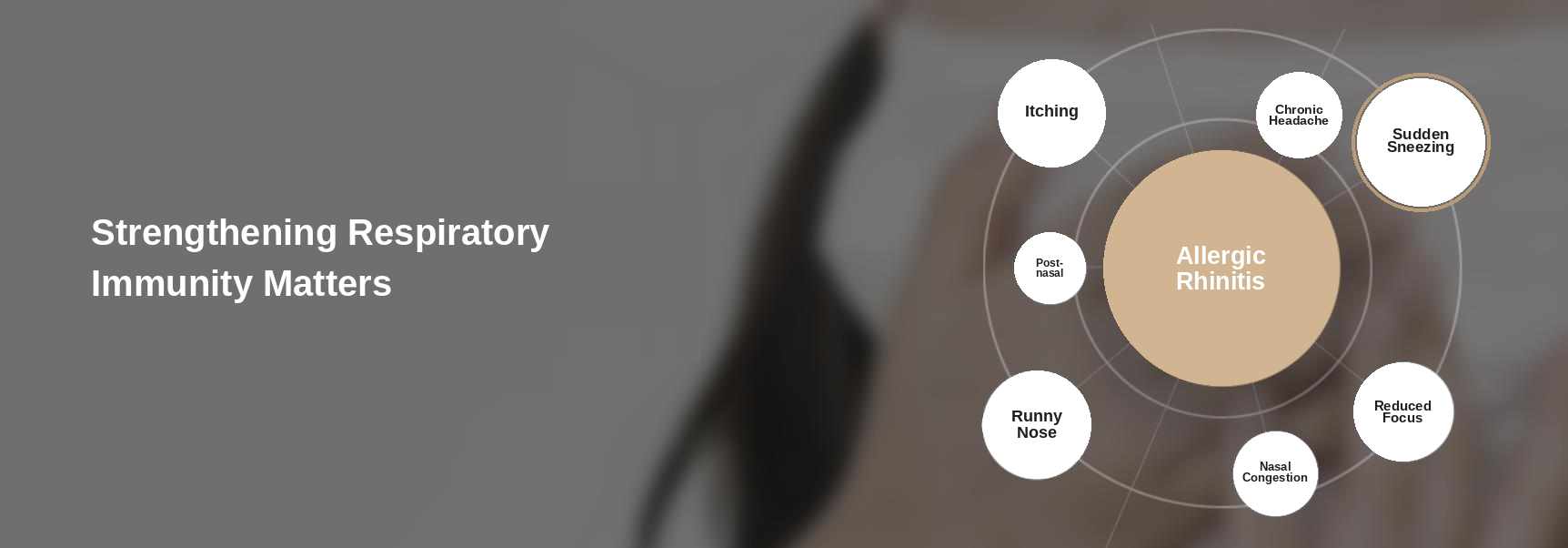
Allergic rhinitis is a condition in which the nasal mucosa develops inflammation from an oversensitive reaction to a specific antigen (allergen). Symptoms appear when the body’s immune system overreacts to a specific substance, driven by both environmental factors and the body’s own immune characteristics.
Environmental factors that trigger or worsen allergy symptoms include:
▪️ Inhaled Antigens: House dust mites, pollen, animal hair and dander, mold, and more.
▪️ Harmful Substances and Weather: Air pollution, fine dust, cigarette smoke, and sudden changes in temperature and humidity.
Factors related to the body’s internal immune state include:
▪️ Immune System Imbalance: A state in which the immune system mounts an excessive defensive response even to harmless external stimuli.
▪️ Genetic Factors: A family history of allergic conditions (atopic dermatitis, asthma, allergic rhinitis, etc.) in parents or relatives.
▪️ Adult-Specific Factors: Overall reduced immunity from stress, accumulated fatigue, chronic sleep deprivation, excessive alcohol consumption, and an unbalanced diet.
Hamsoa Family Clinic Allergic Rhinitis Program